Understanding Industrial Coatings: Types and Uses

Industrial coatings protect assets from corrosion, heat, and wear. This overview explains the main categories, their properties, and how to match coating types to industrial paint uses like structural steel or high-temperature machinery.
- Industrial coatings serve different jobs, from corrosion barriers to heat resistance, and the function dictates the base material.
- Substrate preparation is the largest factor in long-term coating performance, not just the paint system.
- Sourcing decisions depend on matching chemical compatibility, service temperature, and environmental exposure.
- Maintenance planning should account for coating thickness, wear patterns, and inspection access.
- Technical data sheets and application specs must define film thickness, cure times, and recoat windows.
What industrial coatings actually do
Industrial coatings are engineered film-forming systems applied to metals, concrete, plastics, and composites. Their job is not cosmetic. They stop corrosion, resist heat, block chemicals, or reduce friction. A structural steel beam in a marine environment needs a corrosion barrier that withstands salt spray. A furnace liner needs a heat-resistant layer that holds up under high temperatures. A chemical plant pipe needs a coating that resists solvent attack.
The term covers many products. Epoxy resins, polyurethanes, zinc-rich primers, silicone rubbers, and ceramic powders all fall under this umbrella. The choice depends on three things: what the asset is made of, what environment it faces, and how long it must last before maintenance.
For a buyer or engineer, the first question is always function. Are you protecting against rust, or are you protecting against acid? Are you coating a moving part, or a static structure? Are you applying this in the field, or in a shop? The answers shape the entire specification.
Core categories by chemistry
The main categories of industrial coatings are defined by their resin chemistry. Each type has a distinct set of properties.
Epoxy systems are the workhorses of industrial protection. They offer strong adhesion to metal, good chemical resistance, and a hard finish. Two-component epoxies are common for structural steel, marine hulls, and concrete. They cure by reaction, not just evaporation, which gives a dense, durable film. The trade-off is brittleness. Epoxy can crack if the substrate flexes, and it is sensitive to UV if used as a topcoat.
Polyurethane systems are often used as topcoats over epoxy. They add UV stability and a tougher, more flexible surface. A typical marine system uses an epoxy primer, an epoxy intermediate, and a polyurethane topcoat. The polyurethane protects the epoxy from UV degradation and abrasion. It is also easier to repair in the field, which matters for maintenance cycles.
Alkyd systems are oil-based and have been used for decades in light industrial settings. They are forgiving to apply and tolerate minor surface imperfections. They are not the first choice for heavy chemical service or high durability work, but they remain useful for maintenance painting and non-critical structures.
Zinc-rich primers are different in kind. They are not just a resin film. They contain metallic zinc powder and work through cathodic protection. When the coating is scratched, the zinc corrodes before the steel does. This is critical for offshore structures and ship hulls. The trade-off is that zinc-rich coatings are often thicker, less flexible, and can be difficult to apply at full zinc loading.
Silicone and fluoropolymer systems handle extreme environments. Siloxane resins resist high heat and weathering. Fluoropolymers resist almost all chemicals and are used where acid exposure is a constant risk. They are more expensive and require careful application control.
How substrate preparation drives performance
No coating system performs well on a dirty or poorly prepared surface. This is the most common failure mode in industrial practice. A thin film of mill scale, oil, or salt will cause pinholes, peeling, and early corrosion.
Surface preparation is defined by standards, but the practical reality is physical work. Grinding, blasting, or chemical cleaning creates a clean, slightly rough surface that the coating can grip. The roughness profile matters. Too smooth, and the coating has little to hold. Too rough, and the film thickness at the peaks is thin, which weakens protection.
For steel, blast cleaning to a near-white or white-metal finish is common for high-durability work. Hand cleaning or shot blasting is acceptable for maintenance or less exposed assets. The method must match the service. A coating on a poorly cleaned surface will fail long before the design life, no matter how good the chemistry is.
Inspection is part of preparation. Visual checks, holiday detection for non-conductive coatings, and thickness measurement are standard. A coating that is too thin at the low points of a weld or a fillet will corrode first. Application workers must be trained to maintain uniform thickness, especially in complex geometries.
Matching coating types to industrial paint uses
The application determines the specification. Here is how the main uses map to coating categories.
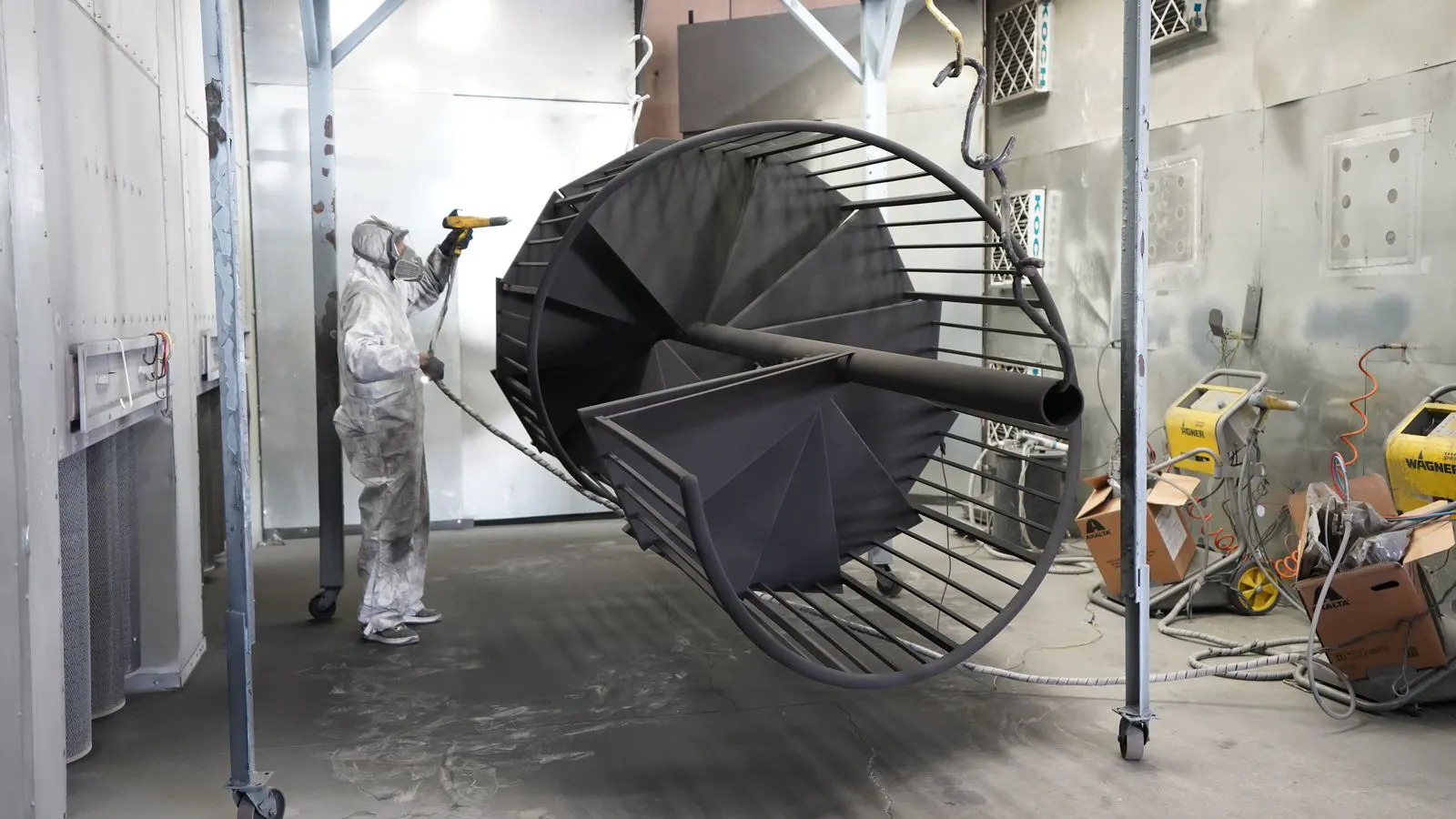
Structural steel in buildings, bridges, and towers usually needs a corrosion barrier system. A zinc-rich or epoxy primer, an epoxy intermediate, and a polyurethane or epoxy topcoat is a common combination. The goal is to block oxygen and moisture from reaching the steel. Thickness is critical. A thin film may look fine but will fail at stress points.
Marine and offshore assets face salt, humidity, and constant UV. The system must resist chloride pitting and UV degradation of the topcoat. Epoxy-polyurethane combinations are standard. The polyurethane handles the UV, and the epoxy handles the adhesion and barrier function. Zinc-rich primers are used where cathodic protection is needed.
High-temperature applications include boilers, exhaust systems, and furnace linings. Standard epoxies will burn off or degrade at high heat. High-temperature epoxies, inorganic silicates, or ceramic coatings are used instead. These are specified by maximum service temperature. A coating rated for 300 degrees Celsius is not the same product as one rated for 1000 degrees.
Chemical service requires resistance to specific acids, solvents, or alkalis. A chemical plant may need a fluoropolymer topcoat on an epoxy base. A wastewater treatment facility may need a coating that resists sulfuric acid and microbial attack. The chemical list must be part of the specification, not an afterthought.
Abrasion and impact resistance is needed on conveyors, hoppers, and vehicle bodies. Epoxy or polyurethane systems with hard additives are used. The goal is to reduce material loss from friction and protect the substrate from wear.
A worked example: coating a steel storage tank
A plant needs to coat an internal steel storage tank that will hold a mild corrosive chemical. The tank is stationary, but it will be exposed to the chemical at the bottom and to air at the top. The service temperature is ambient. The environment is humid.
The first step is substrate preparation. The tank is blasted to a near-white finish to remove rust and mill scale. The surface is inspected for defects. Any scratches or low spots are cleaned and repaired.
The coating system is selected for chemical resistance and adhesion. An epoxy primer is applied to the blasted surface. It provides adhesion and a barrier. An epoxy intermediate is applied next. It builds up the film thickness and adds chemical resistance. A polyurethane topcoat is applied to the upper wet area. It adds abrasion resistance and UV stability. The bottom wet area may get an additional epoxy layer or a specialized chemical-resistant topcoat.
Thickness is specified. The primer may be 60 microns dry film thickness. The intermediate may be 120 microns. The topcoat may be 60 microns. Total system thickness is around 240 microns. This is not a guess. It is based on the corrosion rate and the required design life.
Application is done by spray or brush, depending on access. The tank is allowed to cure between coats. Recoat windows are critical. Applying the next coat too early or too late can cause adhesion failure. The technical data sheet defines these windows, and the application team must follow them.
After application, the coating is inspected. Thickness is measured at multiple points. Adhesion is tested with tape tests or pull-off tests. Any defects are repaired before the tank is filled. The final inspection report becomes part of the asset maintenance file.
Sourcing decisions and specification controls
When sourcing industrial coatings, the product name is less important than the specification. Two suppliers may offer similar products. The difference is in the technical data, application support, and warranty.
The specification must define the substrate condition, the coating system, the thickness, the cure time, and the inspection method. It should also define the environmental conditions for application. A coating applied in freezing conditions or high humidity will perform differently than one applied in ideal conditions.
Technical data sheets are the baseline document. They list properties, mixing ratios, pot life, and recoat windows. But they do not cover the full application. The manufacturer’s technical service team should be involved. They can advise on surface preparation, application equipment, and troubleshooting.
Warranty terms matter. A long-term warranty is valuable, but it usually requires strict adherence to application specifications. If the surface was not prepared correctly, or if the coating was applied outside the temperature range, the warranty may not apply. The buyer must understand these conditions before signing.
Maintenance planning should include coating inspection. A coating system degrades over time. Scratches, peeling, and corrosion at cut edges are signs of failure. A maintenance program should include visual inspection, thickness measurement, and repair of damaged areas before the corrosion spreads.
Common mistakes in coating projects
The most common mistake is underestimating surface preparation. It is the cheapest part of the project and the most important. Cutting corners here saves money short-term and costs far more in long-term failure.
Another mistake is choosing a coating based on price alone. A cheaper system may fail early, leading to repeated maintenance and downtime. The total cost of ownership includes the cost of failure. A more expensive system that lasts longer is often cheaper over the life of the asset.
Miscommunication between the designer, the contractor, and the supplier is another issue. The specification must be clear. Everyone must agree on the substrate condition, the coating system, and the acceptance criteria. Ambiguity leads to disputes and poor outcomes.
Ignoring environmental conditions is a frequent error. Coatings must be applied within specified temperature and humidity ranges. If the substrate is cold, moisture can condense on the surface and cause adhesion failure. If the air is too humid, the coating may not cure properly. The application team must monitor conditions and pause work when necessary.
Poor documentation is a hidden risk. If the coating records are lost, the maintenance team has no idea what is on the asset. They may apply the wrong repair coating or miss critical inspection points. Good records are part of the asset’s long-term value.
Final considerations for specification
The choice of industrial coatings is a technical decision. It balances protection, cost, and maintainability. There is no one-size-fits-all answer. The asset, the environment, and the service life determine the system.
Buyers and engineers should focus on function first. What is the coating supposed to do? Then they should match the chemistry to the job. Epoxy for adhesion and barrier. Polyurethane for UV and abrasion. Zinc for cathodic protection. Inorganic or ceramic for heat. Fluoropolymer for chemical resistance.
Substrate preparation is non-negotiable. A good coating on a bad surface is a failure waiting to happen. The specification must define the surface condition and the acceptance criteria. The application team must be trained and supervised.
Documentation and maintenance planning complete the picture. The coating is not a one-time job. It is a system that requires inspection and repair. A well-specified coating program, with good records and a maintenance plan, delivers the protection the asset needs.
The goal is not the thickest or the most expensive coating. The goal is the right coating for the right job, applied correctly, and maintained properly. That is how industrial assets stay protected and operational for their full design life.
Frequently asked questions
What is the difference between an industrial coating and a standard paint?
Industrial coatings are engineered for specific performance, such as corrosion resistance or chemical resistance. Standard paint is usually for appearance and basic protection. Industrial coatings have stricter specifications for thickness, adhesion, and environmental resistance.
How thick should an industrial coating be?
Thickness depends on the substrate, the environment, and the required service life. Structural steel may need 200 to 400 microns of total dry film thickness. Chemical service may require more. The specification must define the minimum and maximum thickness for each coat.
Can I apply a coating over an existing coating?
It depends on the condition of the existing coating and the chemical compatibility. If the existing coating is sound and clean, it may be acceptable. If it is peeling or contaminated, it must be removed. The new coating must be compatible with the old one to prevent adhesion failure.
What is the most important factor in coating performance?
Substrate preparation is the most important factor. A well-prepared surface ensures adhesion and reduces the risk of early failure. The coating chemistry is important, but it cannot compensate for poor surface preparation.
How do I know when a coating needs repair?
Look for visible defects like peeling, blisters, or corrosion at cut edges. Measure the thickness at regular intervals. If the coating is worn below the minimum thickness or shows signs of degradation, it needs repair before the substrate is exposed.